
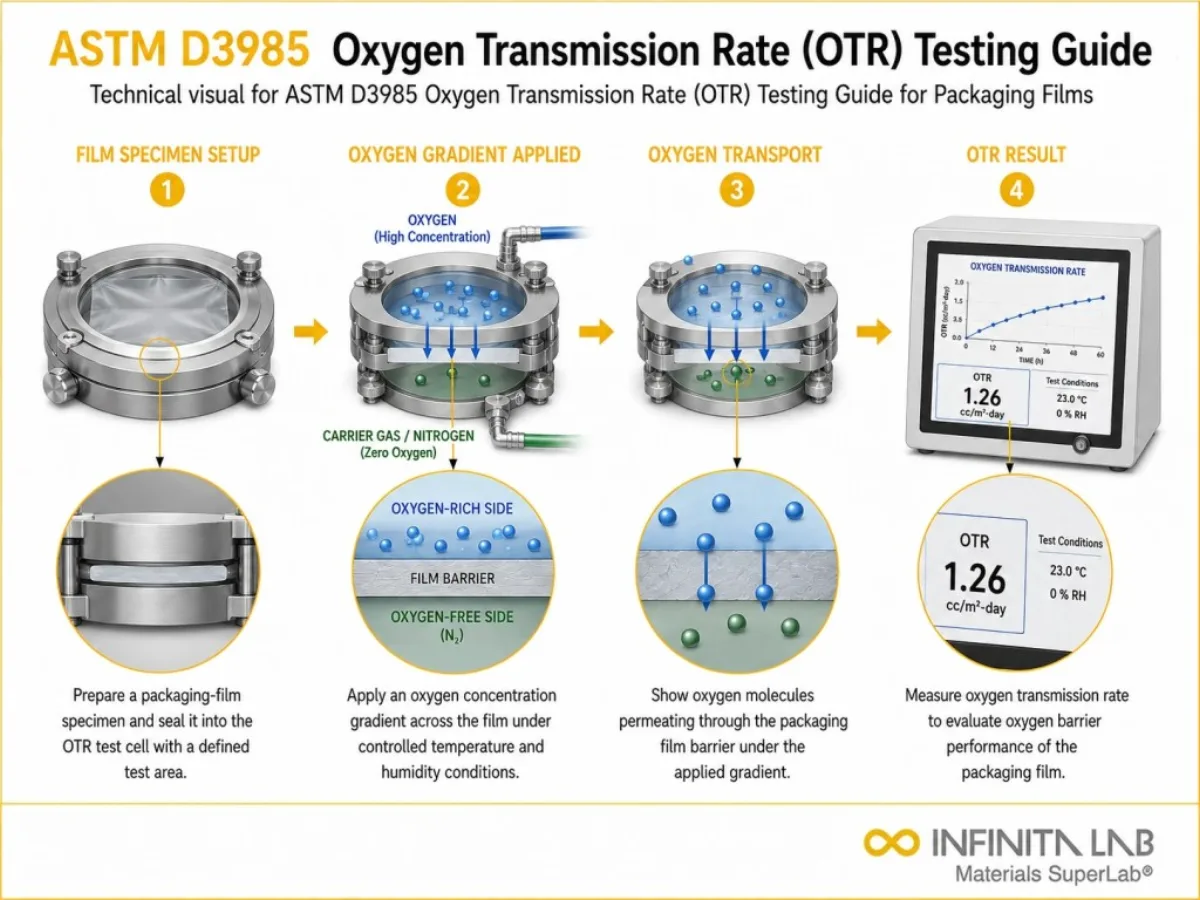
A result without a specimen, method and test condition is not a usable packaging specification. We connect every reported value to the exact material stack, nominal thickness, laboratory conditions, date and project reference.
1. Verify the flexible material
| Check | Reference | What the result means | What it does not prove alone |
|---|---|---|---|
| OTR | ASTM D3985 | Steady-state oxygen transmission through the tested film or laminate under stated conditions. | The shelf life of every coffee in every finished pouch. |
| WVTR | ASTM F1249 | Water-vapor transmission through the tested flexible barrier under stated conditions. | Finished-pack protection if seals, valve or construction differ. |
| Seal strength | ASTM F88/F88M | Force required to separate a seal strip and the observed failure mode. | Leak-free performance without agreed sampling, sealing and acceptance criteria. |
ASTM itself notes that OTR is important but not the sole determinant of package protection. Buyer and supplier should agree on samples, conditions and acceptance criteria before treating a report as a release requirement.
2. Match the report to the bill of materials
The report name, layer order, grade or supplier reference, nominal thickness and tested date should match the approved production construction. If the barrier web, gauge, adhesive, sealant or converting route changes, the team reviews whether existing evidence still applies.
3. Verify the finished pouch
- Dimensions, gusset opening and filled stance
- Zipper operation, top-seal clearance and tear direction
- Valve model, position and installation
- Seal appearance and agreed seal-strength or leak checks
- Laminate bond, surface rub and handling condition
- Artwork, text, barcode, label area and finish registration
4. Keep a production trail
The release record should connect the signed artwork, physical reference, material specification, approved reports, purchase order, case quantity and inspection points. Repeat orders are checked against this controlled reference rather than against memory or a photograph.
Questions to ask when reviewing a barrier report
- Was a single film, laminate or finished pouch tested?
- What were the temperature and humidity conditions?
- What units and detection range were used?
- Does the layer order and thickness match the quotation?
- Are valve and seal performance covered separately?
- What acceptance criteria will control production?
Research notes
Sources & standards
- ASTM D3985-24: oxygen gas transmission rate
- ASTM F1249-25: water-vapor transmission rate
- ASTM F88/F88M-23: seal strength of flexible barrier materials
Technical references explain the decision framework. Final performance and compliance depend on the exact approved construction, test conditions, intended use and destination market.