Flat bottom valve pouch
A structured retail format with strong shelf presence. Often used for premium whole-bean coffee, subscription packs, and display-focused product lines.
 Get a Quote
Coffee packaging guides
Use these notes to prepare a better brief before requesting samples, artwork proofing, or mass production.
Browse Guides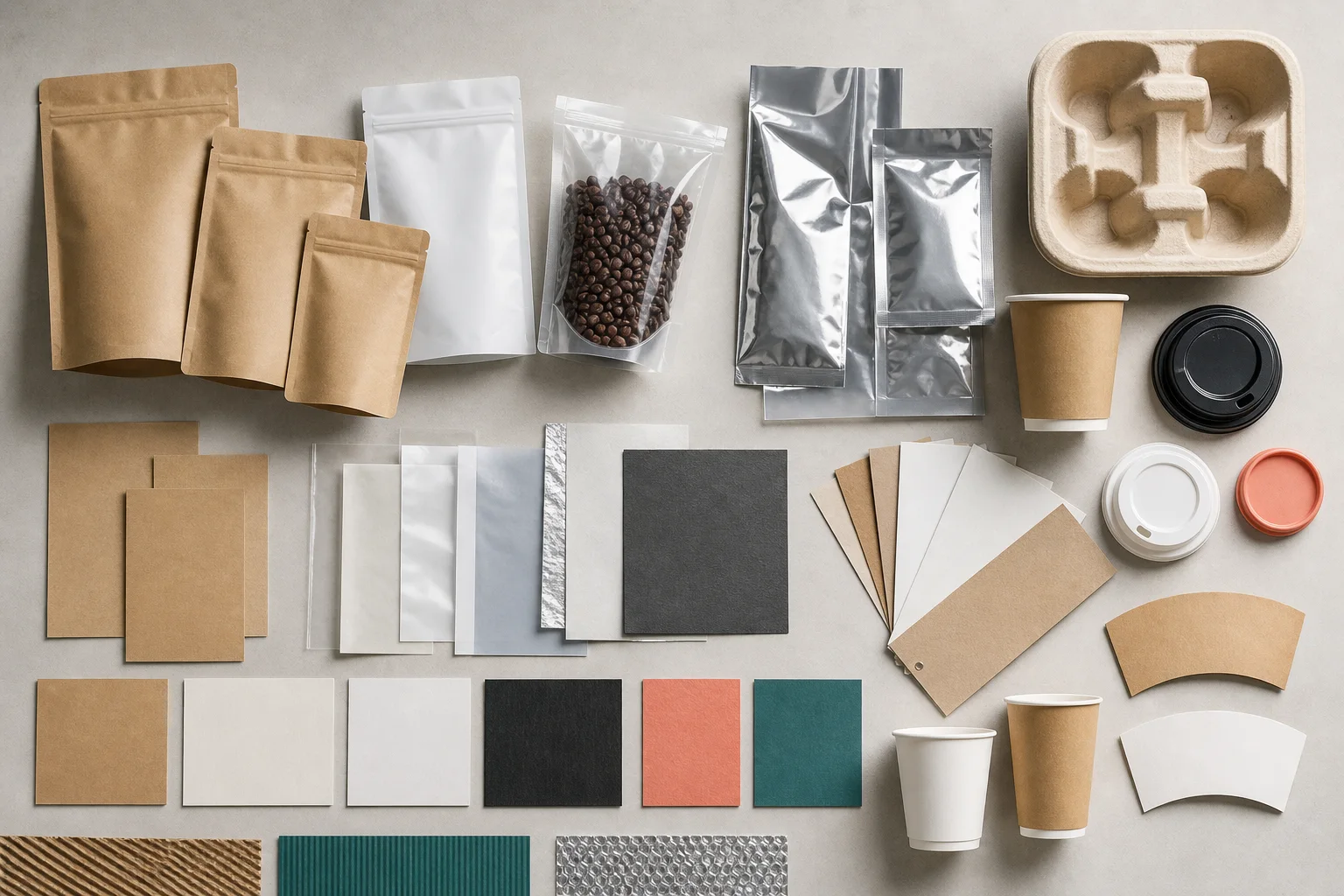
Guide index
Strong coffee packaging is usually a set of linked decisions: product freshness, bag style, size, artwork, sampling, production, and shipping.
Flat bottom, stand up, side gusset, vacuum, and single-serve formats.
02How oxygen, moisture, light, CO2, and sealing choices affect shelf life.
03How to brief oz, lb, g, inches, and mm without guessing.
04What to prepare before plates, samples, or production approval.
05When to use free standard samples, 1,000 custom samples, or 10,000+ production.
06How to discuss kraft, foil, VMPET, PET/PE, mono-material, and compostable options.
07Destination, cartons, labels, pallet plans, and export preparation.
08The short list that helps us quote faster and recommend the right route.
01 / Bag styles
A structured retail format with strong shelf presence. Often used for premium whole-bean coffee, subscription packs, and display-focused product lines.
A flexible and familiar option for whole bean, ground coffee, powders, and test launches. Zippers and windows can be added when the use case fits.
Useful for larger fills and traditional coffee shelf presentation. Check the filling equipment and retail display requirement before confirming.
Ground coffee, drip packs, capsules, sachets, and stick packs need different seal, oxygen, and secondary packing decisions.
02 / Freshness
Freshly roasted beans release CO2. A one-way degassing valve helps release gas while limiting oxygen entry.
Foil, VMPET, EVOH, PET/PE, and other laminates are chosen around oxygen, moisture, aroma, and light protection.
Heat-seal performance, zipper placement, and film thickness affect leaks, shelf life, and filling-line reliability.
Retail shelf, ecommerce, subscription, wholesale, cafe counter, and export routes can require different packing strength.
03 / Sizes
For North American buyers, include common fill weights such as 8 oz, 10 oz, 12 oz, 1 lb, 2 lb, or 5 lb. For global buyers, g and kg are also useful. If you already have a reference bag, send the flat width, height, gusset, and bottom dimensions in inches or mm.
Actual capacity depends on bean density, grind level, headspace, valve, zipper, and bag structure, so fill testing is recommended before final approval.
04 / Artwork
Use the confirmed dieline before finalizing logo placement, panels, zipper, valve, seal zones, and bottom gusset information.
Confirm matte, gloss, kraft look, metallic effect, window, spot effect, and color expectations before production.
Prepare net weight, origin, roast date area, barcode, nutrition or compliance copy, and any destination-market wording.
Vector artwork, linked images, fonts or outlined text, Pantone references, and PDF proof approval help the process move faster.
05 / Samples and MOQ
Best when you need to feel the material, check structure, compare size, or understand finish options.
Best when you need your own artwork or style for a real market test before the production order.
Best when the specification, artwork, quantity, packing, and destination are ready for a bulk quote.
06 / Materials
Good for a natural, tactile brand expression. Confirm whether the full structure includes barrier films or coatings.
Useful for strong light, oxygen, and moisture protection. The complete laminate matters more than the visible outside layer.
Common for print surface, strength, seal layers, and clear windows. Recovery depends on the full layer combination and local infrastructure.
Ask for certification status, performance limits, destination-market rules, and whether the claim is suitable for your sales region.
07 / Worldwide supply
United States, Canada, and regional distribution projects using oz, lb, inches, carton labels, and retail-ready packing notes.
Coordinate product language, material claims, carton markings, and destination requirements before production.
Support cafe chains, roasters, distributors, and ecommerce packaging programs with destination and packing details.
Share your country, city, port, deadline, and shipping preference so we can plan the practical route.
Quote checklist
Photos, reference packaging, dielines, and target market details help us recommend the right material, sample route, and production plan.