Open
Separate the filter arms and open the pouch mouth.
 Get a Quote
Instant & Single-Serve Coffee Packaging
A food-grade hanging-ear filter for a convenient fresh pour-over coffee experience.
Sizes & capacity: Filter bag: 90 x 110 mm; hanging ear: 75 x 55 mm; customized sizes available
Use case
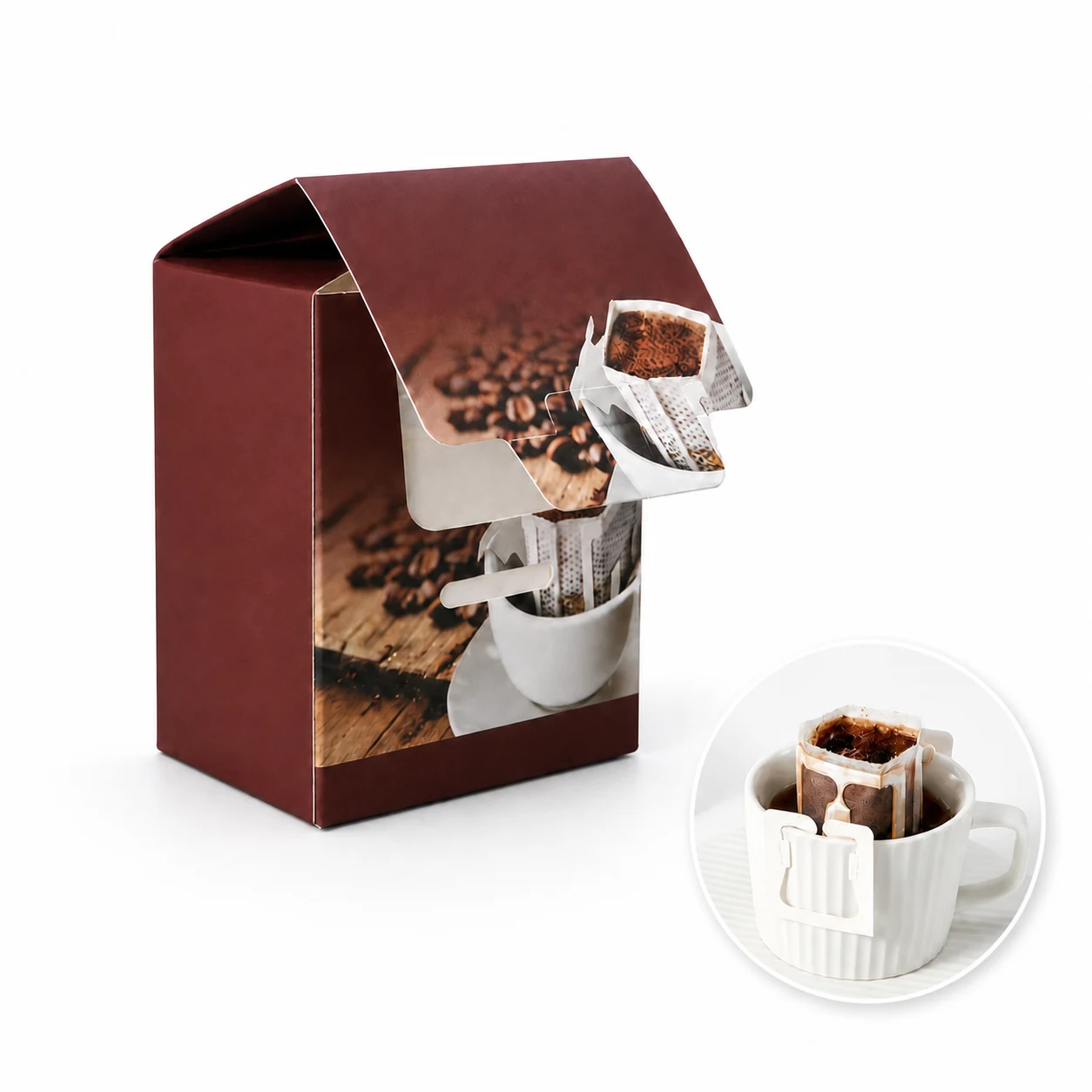
The Hanging Ear Drip Coffee Filter Bag uses filter arms to sit over a cup for a single-serve pour-over route. Confirm filter dimensions, ear fit, material, dose, grind, ultrasonic seal, and any outer barrier pack.
Format details

The filter pouch holds ground coffee, while two side arms fold outward and hook over a cup. The arms support the filter during pouring; they are not the outer storage pack. Once opened, the filter sits inside the cup opening and hot water is poured through the grounds. A separate barrier sachet can protect the filter before use. Cup diameter, arm reach, fill dose, and grind all affect the experience.
Practical sequence
Separate the filter arms and open the pouch mouth.
Rest both arms evenly over opposite sides of the cup.
Add water gradually and let the brewed coffee drain through.
Set filter paper or non-woven material, pouch size, arm reach, dose, print, and individual or bulk packing.
Try the filter on the cups customers use and check arm hold, grounds containment, and flow with the planned grind. Observe opening and placement without tools, and record the cup rim size used for the review.
A single-serve range will be used in offices, hotels, and at home. Test the intended grind and dose on a representative set of cup rims, because hanging ears must hold securely while the filter opens without tearing. Record the recipe, water volume, opening, grounds containment, and extraction observation for each trial. Then review how the filled filter fits its outer sachet and how the user removes it. If cup styles vary, document the tested range instead of promising universal fit. Keep filter approval separate from the outer sachet’s barrier and sealing checks. Note which cup rim styles were used in the trial and whether the filter held during a full pour; avoid general fit claims from a single cup. Photograph the setup on each cup style used in the trial.
Plan around this format
Start with the cup, not the illustration. Put the intended dose and grind into the filter, test the opening and extraction flow, and check that the hanging ears hold on the cups customers are likely to use. Confirm filter dimensions, ear material, ultrasonic seal, and whether the filter is packed individually or inside an outer barrier sachet.
The outer sachet needs its own fill, opening, seal, and coding review. Keep the recipe, cup range, filter size, and packing route in the sample record so later changes can be compared under the same conditions.
Buying notes
Open the question that matches your next decision.
The listed size or capacity options are Filter bag: 90 x 110 mm; hanging ear: 75 x 55 mm; customized sizes available. Confirm the project dimension or capacity, product dose where relevant, seal area, and filled or assembled dimensions before approving the artwork.
The filter dimensions, ear fit, material, dose, grind, and ultrasonic seal affect how it sits on a cup and how it brews. Test common cup sizes and coordinate the outer barrier pack when one is used.
Send the product, target size or dose, current format, artwork status, quantity, destination, and preferred sample or quote route. Start with Food-grade non-woven fabric or filter paper and use the checks below to frame the first discussion.
Choose with confidence
A hanging-ear filter needs to fit the cup and support the intended brew. Review the filter, supports and coffee dose before choosing the separate outer packaging.
See how samples are reviewedProvide the intended dose, grind and cup range. Check how the supports open and hold the filter during filling and brewing. Confirm the filter’s form and packing-machine interface with the responsible partner.
Keep preparation instructions on the agreed outer packaging and confirm which components carry artwork. Identify the filter and protective sachet separately in your brief so the quote covers the parts you actually need.
Use the intended coffee for an opening, cup-fit and brew trial. Keep the chosen filter reference, dose and equipment notes with the approval. Review any protective outer sachet as a separate specification before production.
In practice
A filter should feel straightforward before the customer pours any water.
Use cups representative of where the product will be served, including the relevant rim sizes and shapes. Open the supports and check the fit before and during a controlled brew trial.
Record the cup dimensions with the result rather than saying the filter fits all cups. A hotel cup, travel mug and small tasting cup can present different support and clearance conditions.
The listed dose range is a starting point for evaluation, not a guarantee for every grind and coffee. Fill the candidate with the intended recipe and examine the seal, opening and space above the grounds.
Ask the filling partner to review the specified sealing route. Keep the filled sample separate from an empty display sample because the two answer different purchasing questions.
The folded and filled filter needs enough room to enter and leave the protective sachet without bending its supports. Confirm outer dimensions after reviewing that filled arrangement.
Check that the tear opening gives adequate removal space and that a multi-pack box does not compress the contents. Record filter, sachet and carton references together so procurement cannot accidentally reorder one component from an earlier, incompatible version.
Product enquiry
Share your coffee, fill weight, planned quantity and destination. Ask about fit, samples or pricing; we will review the details needed for a useful quotation.
Custom production usually starts from 10,000 pieces. Available standard samples are free; shipping is confirmed separately.