A 12 oz net weight is not a complete bag specification. The same 340 g of coffee can occupy a different volume depending on origin, roast development, bean size and density. The correct pouch begins with the coffee and the route to market, then moves to dimensions and materials.
This worked example shows the information we would confirm for a retail whole-bean project. It is a specification framework, not a universal recipe or shelf-life guarantee.
1. Define the packed product
| Input | Why it changes the bag |
|---|---|
| Whole bean or ground | Grinding increases exposed surface area and changes degassing and aroma-loss behavior. |
| Roast profile | Roast and process affect bean density, gas release and the filled volume. |
| Packing time after roast | Freshly roasted coffee may require a coordinated valve, headspace and top-seal plan. |
| Target freshness window | The target must be matched to the exact laminate, seals, filling process and distribution conditions. |
| Sales and shipping route | Retail, parcel shipping, wholesale and export place different demands on presentation and handling. |
2. Run a fill test before fixing dimensions
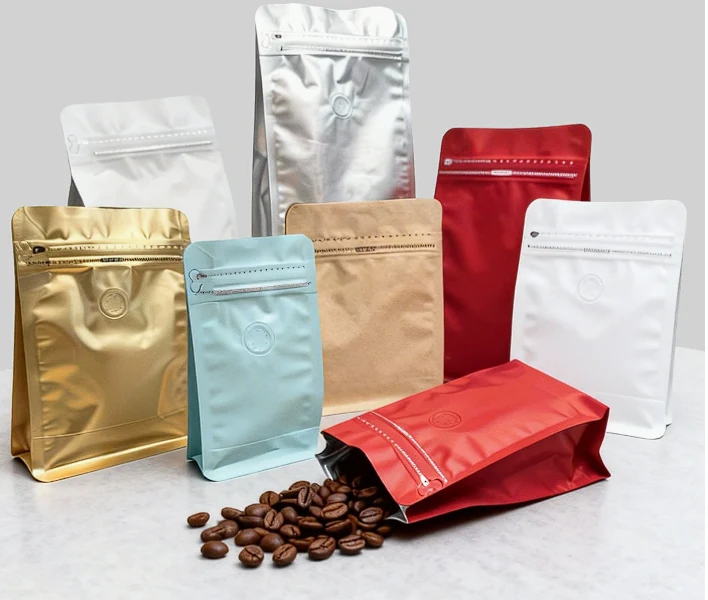
We use the customer’s actual coffee, or a representative coffee with a recorded bulk density, to check width, height, bottom-gusset opening and usable headspace. The filled sample should stand correctly, close without crowding the zipper and leave enough film above the product for the final seal.
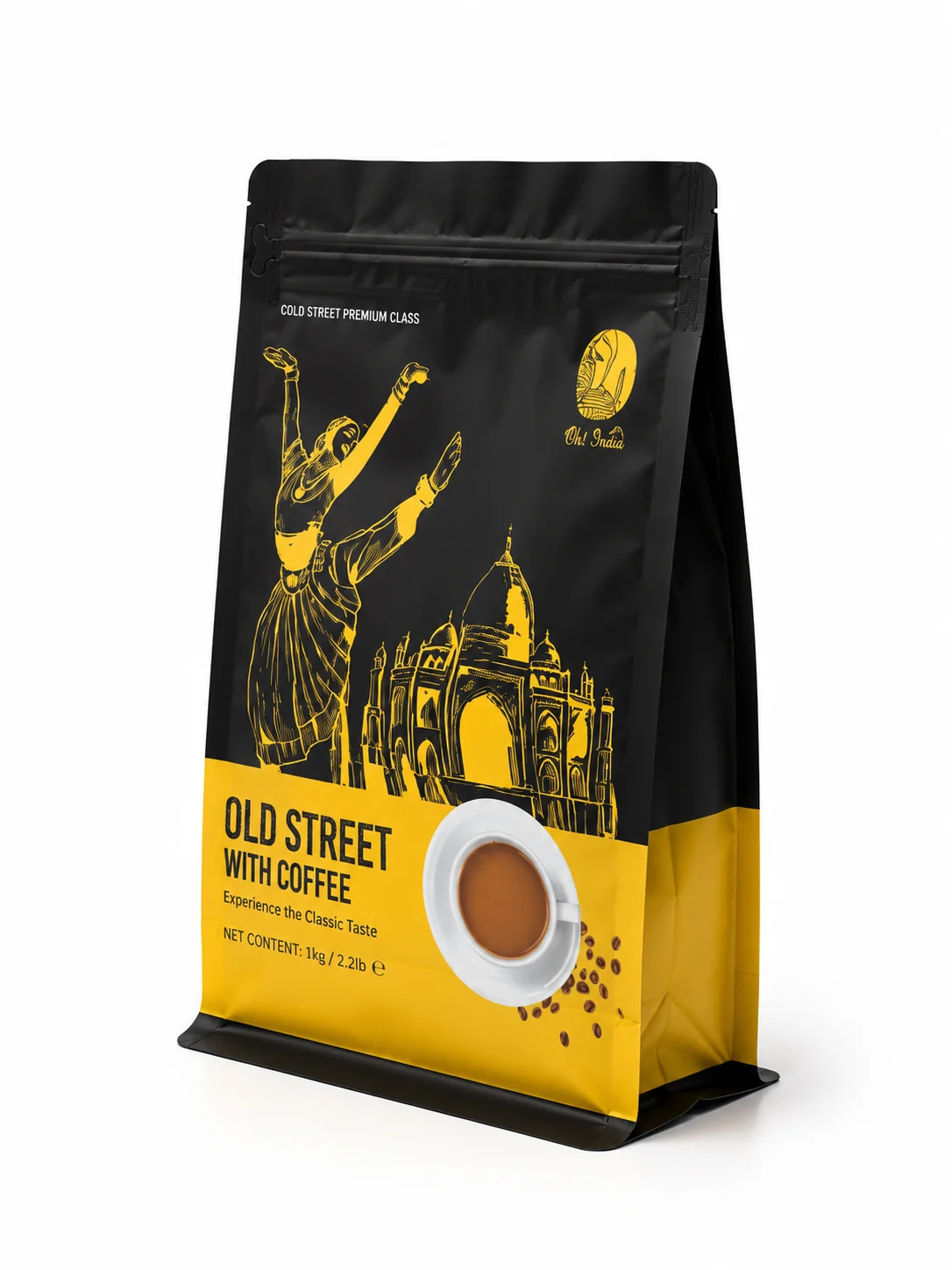
The artwork is then reviewed on the filled pack. This catches common problems such as a front panel that becomes too narrow, a label that wraps into a corner, or a valve that sits inside a fold or close to the zipper.
3. Select a construction by required function
| Starting direction | Typical reason to review it | What still needs confirmation |
|---|---|---|
| PET / VMPET / PE | Everyday opaque barrier route with broad print and finish options. | Layer gauges, OTR, WVTR, sealant and distribution target. |
| PET / AL / PE | Crystavo 100% Barrier option for projects prioritizing maximum opaque protection. | The exact tested construction, report conditions, flexing, valve and seal performance. |
| Kraft / VMPET / PE | Natural paper appearance over an internal coffee barrier. | Paper direction, scuffing, print response, laminate bond and food-contact layer. |
Material abbreviations alone are not enough. The approved record must identify layer order, nominal thickness, printed side, adhesive system, barrier layer and sealant. Performance data only applies to the specimen and conditions stated in the report.
4. Treat valve, zipper and seals as one system
For coffee packed while it is still releasing carbon dioxide, a one-way valve can provide a controlled release path. Its type and position are coordinated with the roast, packing time, headspace, laminate, zipper and top seal. A valve does not compensate for a leaking seal or an unsuitable barrier structure.
We also confirm the filling opening, zipper clearance, tear direction, top-seal width and the customer’s sealing equipment. Seal strength can be measured on production-representative specimens, but the agreed acceptance criteria must be written into the project specification.
5. Release a document that can be repeated
The final specification records net weight, target filled dimensions, laminate, valve, zipper, print file, finish zones, seals, case count, carton marks, test references and approved physical sample. The same controlled record supports production inspection and future repeat orders.
What a buyer should receive before mass production
- Approved dieline and artwork proof
- Written material construction and nominal thickness direction
- Filled-size or representative fill-test confirmation
- Valve, zipper and seal details
- Applicable barrier and seal reports with test conditions
- Packing, case-count and shipping-mark requirements
Research notes
Sources & standards
- Specialty Coffee Association: literature review on roasted coffee staling
- ASTM D3985-24: oxygen transmission rate through film and laminates
- ASTM F1249-25: water-vapor transmission rate through flexible barriers
- ASTM F88/F88M-23: seal strength of flexible barrier materials
Technical references explain the decision framework. Final performance and compliance depend on the exact approved construction, test conditions, intended use and destination market.