Form
Shape the web into a tube with its print and mark aligned.
 Get a Quote
Instant & Single-Serve Coffee Packaging
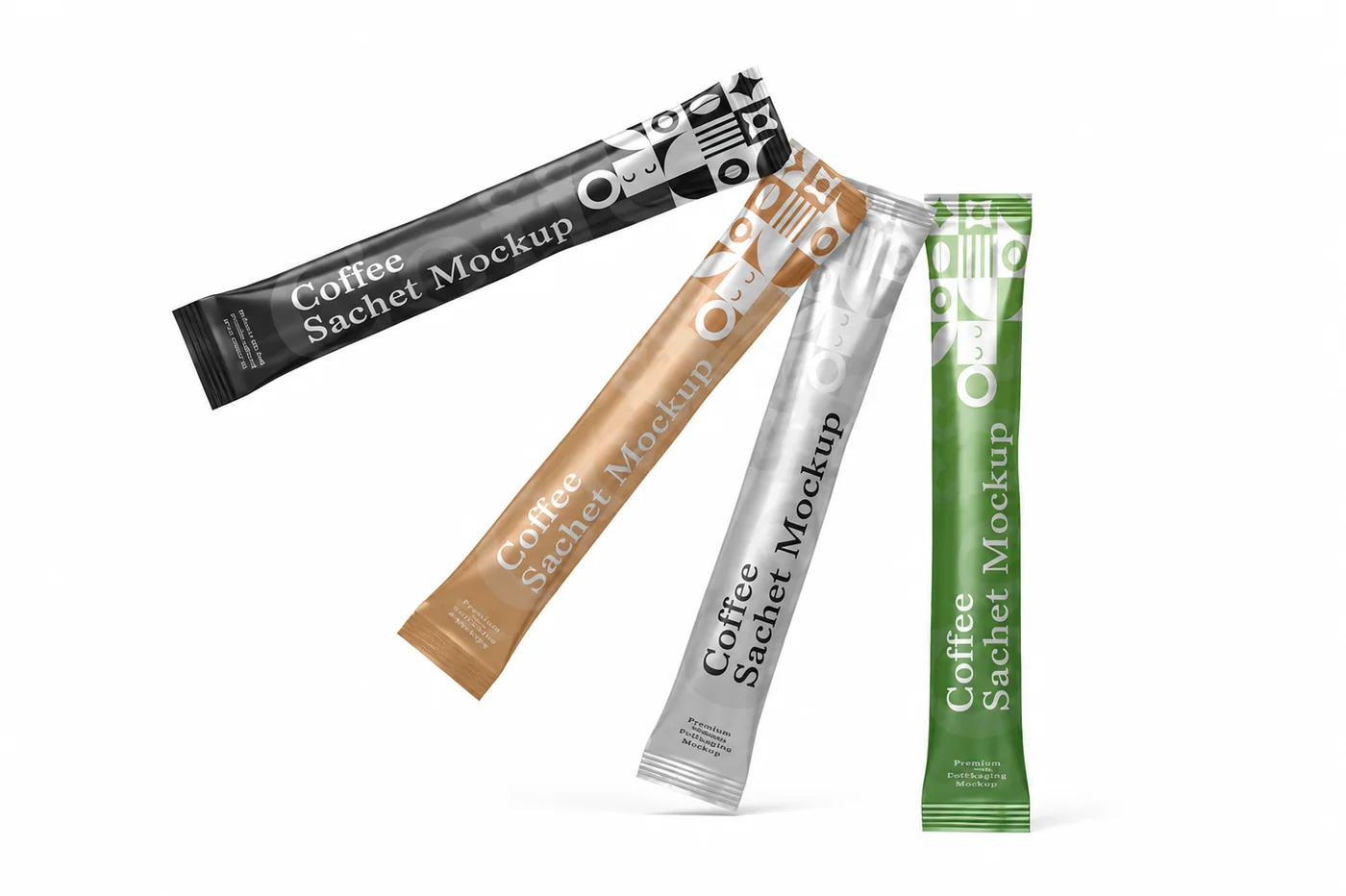
A slim portable format for instant coffee and powdered beverage mixes.
Sizes & capacity: 2 g to 30 g and custom doses
Use case
A slim portion format for instant coffee and powdered mixes. Define the dose, powder flow, web width, seal window, and tear direction around the intended packing equipment.
Format details
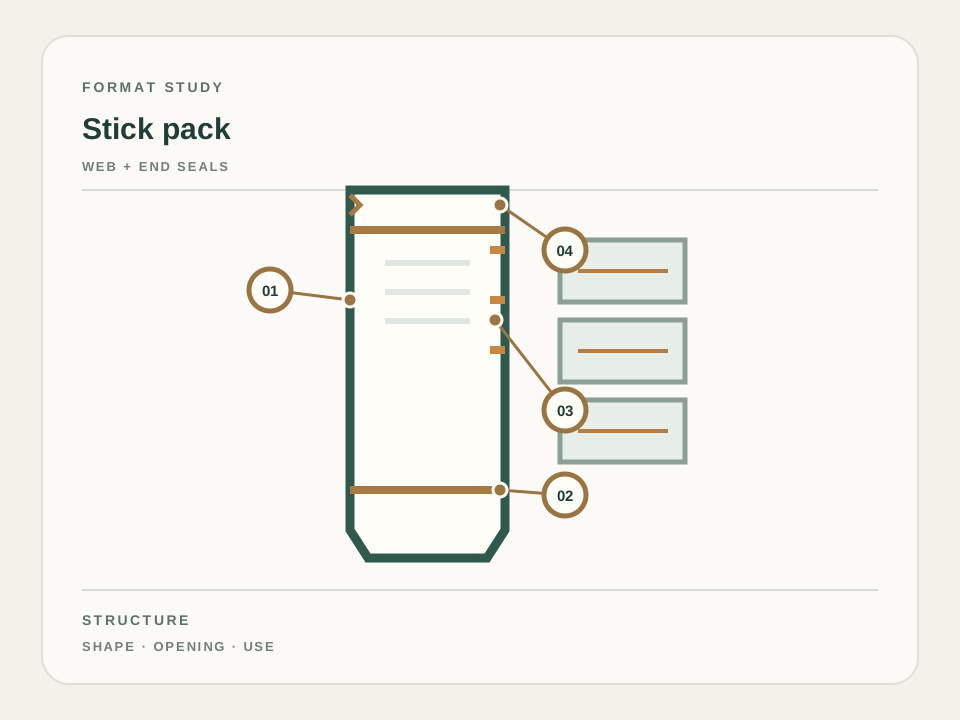
A stick pack is formed from a narrow web into a slim tube, filled with powder, and closed at the ends. A longitudinal seam runs along the body; transverse seals divide one portion from the next. The film roll carries repeating artwork and a registration mark that helps the machine position each cut. The powder dose, flow, pack width, and length all need to suit the filling line and the way a user pours the portion.
Practical sequence
Shape the web into a tube with its print and mark aligned.
Fill the measured powder portion before closing the ends.
Tear at the intended end and pour the powder into a cup.
Choose dose, web width, cut length, film layers, tear feature, print repeat, and registration position.
Run the intended powder on the line and check seam cleanliness, cut position, portion weight, and easy emptying. Confirm the printed repeat and tear end stay aligned after the web is mounted in its normal direction.
A beverage brand is comparing two single-serve doses for an automatic line. Confirm powder flow, target grams, web width, roll direction, eye mark, cut length, and machine pitch before artwork is released. Trial the real or representative powder and look for fines in the longitudinal and end seals. Check that the tear opens cleanly and that the portion empties as intended. Reserve coding space and confirm the count per carton. If each dose uses a different length, assign separate roll and artwork references rather than assuming one repeat length fits both. Confirm the product flow and actual equipment parameters before setting artwork; a cut-length change can affect sachet volume, code location, and carton count. Keep registration marks and the code area clear of the sealing jaws.
Plan around this format
A stick pack starts with powder flow and the machine pitch. Confirm the dose, bulk behaviour, web width, roll direction, eye-mark position, cut length, sealant, tear direction, and planned speed with the filling partner. Run a trial using the real or representative powder and inspect whether fines contaminate the longitudinal or end seals.
Check the opened stick for clean emptying and the packed roll for registration drift. Reserve a clear coding area and keep the approved artwork tied to the rollstock specification, not only to a flat graphic or a sample from another line.
Buying notes
Open the question that matches your next decision.
The listed size or capacity options are 2 g to 30 g and custom doses. Confirm the project dimension or capacity, product dose where relevant, seal area, and filled or assembled dimensions before approving the artwork.
Start with dose, powder flow, web width, pitch, seal window, cut line, tear direction, and machine speed. The rollstock and registration need a production-line trial before artwork is final.
Send the product, target size or dose, current format, artwork status, quantity, destination, and preferred sample or quote route. Start with PET/AL/PE; PET/VMPET/PE and use the checks below to frame the first discussion.
Choose with confidence
A stick pack should fill consistently, travel conveniently and open clearly. Build it around your product dose and packing line before deciding the final slim shape.
See how samples are reviewedShare the powder or soluble coffee, dose and packing-machine details. Check flow, sealing-room needs, roll format and registration with the filling partner. A narrow pack needs a working line fit as well as a convenient appearance.
Check how the coffee name, preparation steps and code area fit the narrow face. Confirm repeat length, seal zones and tear direction on the machine-ready layout before approving the artwork.
Review filling, seal cleanliness, opening and dose delivery using the intended contents and line conditions. Record the trial material and the final film and artwork versions so the repeat order uses the approved setup.
In practice
Narrow packs need an intentional opening and a machine-specific layout.
An instant coffee stick, a sweetened coffee blend and a ground-coffee portion may look similar from the outside but have different preparation and filling requirements. Describe the actual contents and dose in the brief.
Keep preparation wording clear so the user knows whether to dissolve, mix or brew the product. Do not let the convenient stick shape imply that every coffee inside is soluble.
Ask the filling partner for the required web width, print repeat, registration marks and unwind direction where rollstock is used. Agree the sealing and coding areas before placing artwork.
A design that fits a flat rectangle can still put important text into the back seam or cut position. Use the approved machine-specific layout rather than copying dimensions from a photograph of another brand.
Open a filled trial over the intended cup or vessel and observe whether the dose empties cleanly. Then arrange the specified number of sticks in the retail carton or hospitality tray.
Check that each flavor or recipe remains identifiable when the packs are grouped. Record the unit count and layout in the packing brief so a change in stick dimensions does not silently change the retail presentation.
Product enquiry
Share your coffee, fill weight, planned quantity and destination. Ask about fit, samples or pricing; we will review the details needed for a useful quotation.
Custom production usually starts from 10,000 pieces. Available standard samples are free; shipping is confirmed separately.