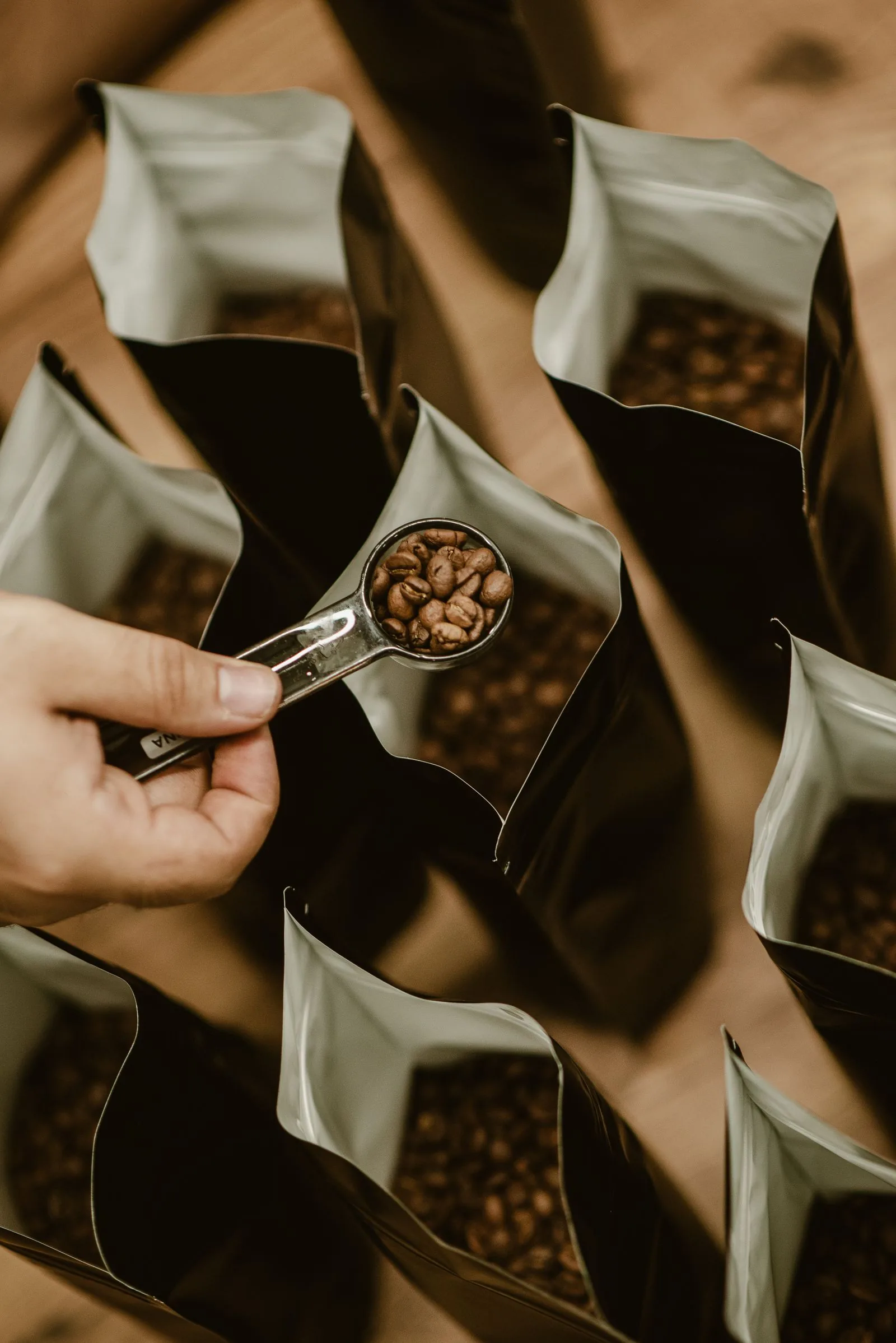

VMPET and aluminum foil are not interchangeable names for a silver-looking layer. VMPET is a polymer film carrying a thin deposited metal layer. Aluminum foil is a continuous metal web. Their suitability depends on the complete laminate and the way the bag is converted, filled and shipped.
Comparison for a coffee project
| Decision point | VMPET direction | Aluminum foil direction |
|---|---|---|
| Primary use | Balanced barrier, appearance, flexibility and cost for many retail projects. | Maximum opaque protection where the approved project prioritizes light, oxygen and moisture control. |
| Construction example | PET / VMPET / PE | PET / AL / PE, a high-barrier direction that still requires project evidence. |
| Appearance | Metallic effect can be used as part of the visual design. | Normally opaque; the outer web controls the printed appearance. |
| Handling review | Check metallization quality, laminate bond and barrier after converting. | Check foil gauge, folds, flex exposure, valve installation and finished-pack handling. |
| Evidence | Exact OTR/WVTR report for the quoted laminate and conditions. | Exact report for the quoted PET/AL/PE construction and conditions. |
Choose by route, not by appearance
A shorter domestic route, predictable replenishment and an everyday retail shelf-life target may support a tested VMPET construction. A longer export route, high humidity exposure, opaque protection requirement or conservative freshness target may justify reviewing PET/AL/PE.
Neither choice removes the need to verify seals, valve installation and the filled bag. A high-barrier web with a leaking top seal is not a high-performing package.
The current range includes an aluminum-foil coffee bag for project-specific PET/AL/PE review; its stated performance still depends on the exact finished construction and evidence.
Questions for the quotation
Planning example: an exporter receives a VMPET quote and an aluminum-foil quote with different prices. Before comparing unit cost, align layer order, nominal thickness, bag dimensions, valve, zipper, print coverage, finish, quantity per design, case pack, and report references. Ask how each proposed construction will be checked after converting and filling, and state the intended distribution route. A silver surface does not identify the barrier layer, while a report value cannot be compared meaningfully without its test conditions and specimen. If both options remain technically suitable, the buyer can compare the commercial difference against a written requirement instead of assuming that the more expensive laminate is automatically necessary. Set a performance threshold before reviewing price differences, then confirm each specimen and test condition meet that scope.
- What is the exact layer order and nominal thickness?
- Which specimen was used for the stated OTR and WVTR?
- What temperature and humidity conditions were used?
- Will the bag include a zipper, valve, laser score or window?
- How long and demanding is the distribution route?
- Will the structure be changed between sample and mass production?
Crystavo records the selected construction and its applicable evidence in the written project specification. Any high-barrier wording applies only to the approved PET/AL/PE option supported by the corresponding report, not to every pouch that contains foil.
Quotation comparison row
Compare the exact layer order, nominal thickness, OTR or WVTR evidence, opacity, flexing exposure, valve installation, sealant, print surface, quantity, and distribution route. A silver appearance is not a material specification, and two unit prices are not comparable when the constructions differ.
Record the result with the project reference.
In practice
Compare evidence on the same basis.
Similar-looking silver layers can represent different constructions.
Keep report conditions visible
When suppliers provide barrier information, compare the units, test conditions and exact specimen construction as well as the result. Ask whether the information describes a flat material or the finished package being proposed. Keep the answers in the quotation comparison.
If those details are missing, treat the numbers as incomplete rather than ranking the materials on them. The correct choice depends on the coffee, process and distribution requirement, not a universal rule that one material name is always the best option.
Include the practical tradeoff
Review forming, sealing, print appearance and expected handling alongside the material discussion. Ask the filling partner which candidate it can trial and what changes would require another approval. Keep all selected features in view, including a valve, closure or window.
A decision made on a single layer can overlook the rest of the package. Once a direction is chosen, record the complete construction and evidence reference so the production order describes the same package that was reviewed.