Fill
Load the planned concentrate quantity using the agreed process.
 Get a Quote
Ready-to-Drink & Liquid Coffee Packaging
Flexible high-barrier formats designed around concentrated flavor, dosing, and distribution.
Sizes & capacity: 250 ml, 500 ml, 1 L, 3 L, and custom capacities
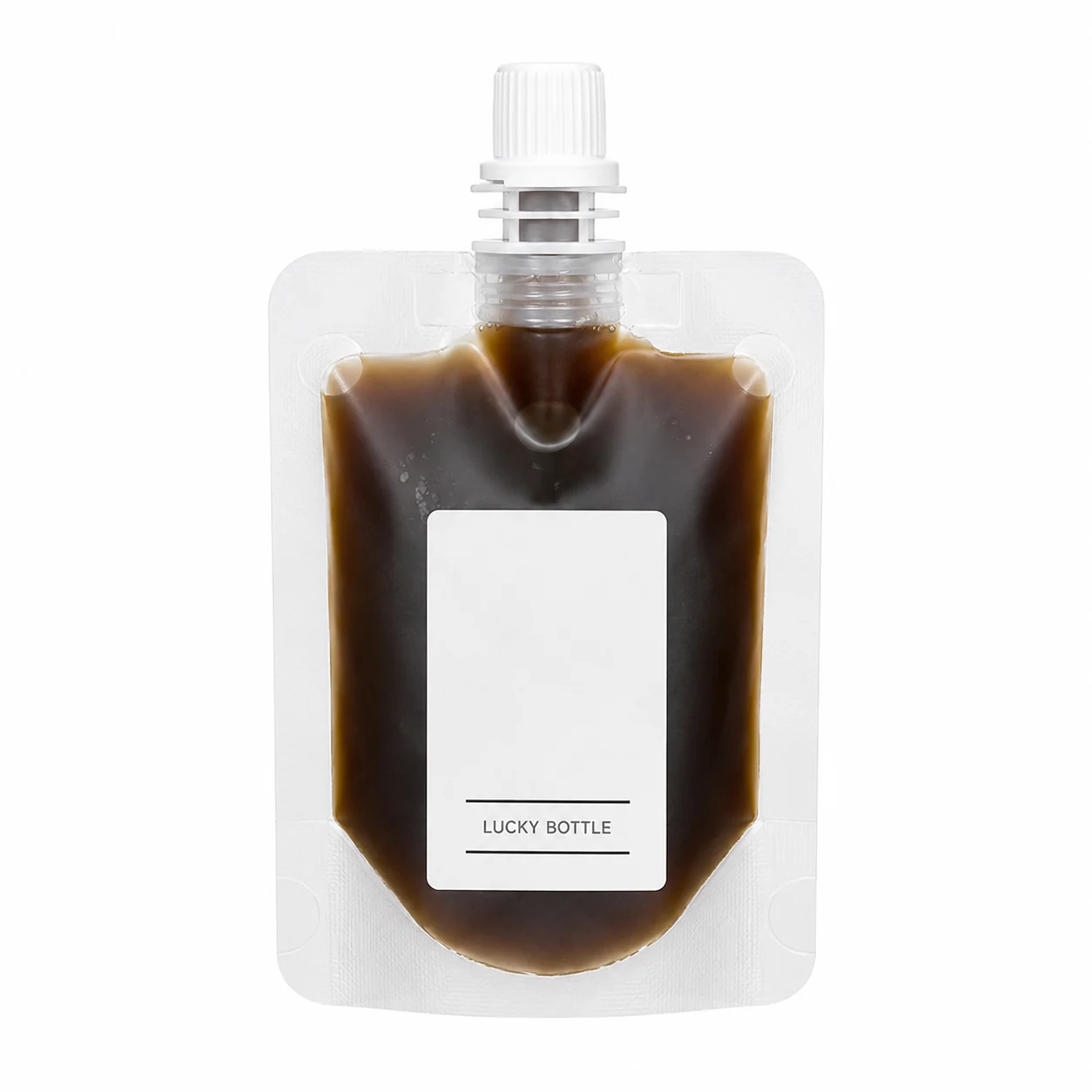
Use case
Coffee Concentrate Packaging is selected around concentration, dosing pattern, fill and sanitation route, opening or fitment, oxygen exposure after opening, and destination. The pouch, liner, or dispensing system follows those conditions.
Format details
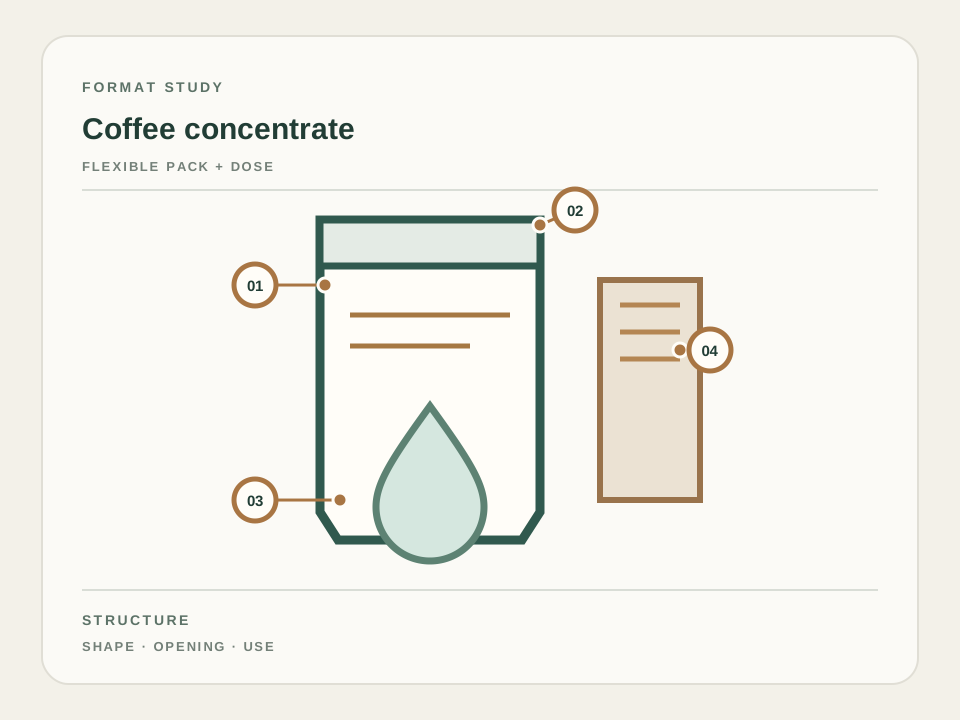
Coffee concentrate can be sold in a small pourable pack or supplied in a larger container for repeat dispensing. The product and serving routine determine whether a pouch, spout, or liner arrangement makes sense; the category name alone does not define one fixed package. This illustration shows a flexible pouch with a controlled opening as one possible route. If the project uses a different format, the sample should reflect that exact system and use.
Practical sequence
Load the planned concentrate quantity using the agreed process.
Use the selected cap, spout, or opening without spilling.
Measure into water, milk, or the intended beverage recipe.
Decide serving size, pouch or liner format, opening or fitment, laminate, print, and number of uses.
Test the actual recipe and dispensing routine; check portion control, resealing, leaks, and storage after opening. Note the serving measure and how the product is protected between uses, then compare that routine with the intended customer instructions.
The same coffee concentrate may be sold as a small pourable serving and as a larger refill for a café. Record concentration, target dilution, viscosity, fill process, opening, and after-opening storage for each route. A small pouch may prioritize portion control and a clean tear; a bulk liner may need a tap, connector, or repeated-dispensing review. Test the actual recipe and user steps, including resealing if applicable. Do not assume one size or laminate suits both routes. Keep capacity, fitment, process, and use instructions tied to the sample that was actually evaluated. Keep retail and café refill capacities on separate sample labels, with the formulation and intended dispense routine recorded for each variant. Label each sample with its capacity, process, and serving method.
Plan around this format
For concentrate, begin with how the product is filled, stored, opened, and dosed. Record concentration, viscosity or flow behaviour, sanitation or treatment route, target fill, fitment or opening, and whether the pack is used once or repeatedly. Check compatibility, leak resistance, dispensing control, headspace, panel stress, and transport handling on a filled sample.
A small retail pouch and a foodservice liner may need different systems even when the liquid is the same. Keep the chosen structure, fitment, filling route, and after-opening handling in the written specification.
Buying notes
Open the question that matches your next decision.
The listed size or capacity options are 250 ml, 500 ml, 1 L, 3 L, and custom capacities. Confirm the project dimension or capacity, product dose where relevant, fit or interface, seal area, and filled or assembled dimensions before approving the artwork.
Start with concentration, dosing pattern, fill and sanitation route, opening or fitment, oxygen exposure after opening, and destination. Select the pouch, liner, or dispensing system after those conditions are clear.
Send the product, target size or dose, current format, artwork status, quantity, destination, and preferred sample or quote route. Start with PET/NY/PE; PET/AL/PE; high-barrier laminates and use the checks below to frame the first discussion.
Choose with confidence
Coffee concentrate packaging depends on how the product is processed, stored and served. Begin with those conditions so the proposed pack supports the actual use.
See how samples are reviewedProvide the formulation, fill volume, filling temperature, any treatment and the intended storage route. Review the pouch or system with its fitment and the equipment partner before choosing a final specification.
Make dilution, serving and storage information readable in the agreed artwork. Check the filled shape, dispensing area and code position. Keep the design linked to the selected pack and fitment rather than to a similar-looking reference.
Agree compatibility, sealing, closure, dispensing and handling checks for the actual concentrate. Keep the accepted sample, process notes and pack specification together so pricing and a later reorder use the same approved scope.
In practice
A concentrate pack should make the next preparation step easy to understand.
Describe whether the concentrate is dispensed behind a counter, portioned for hospitality or sold for home preparation. The useful pack size depends on how often it is opened and how a serving is measured.
Ask the coffee team for confirmed dilution and storage instructions. A larger pack may simplify purchasing while making portion control or opened-product handling less convenient for the intended user.
Review formulation, fill process, selected closure and distribution conditions before comparing artwork concepts. A pouch, container or other format must be evaluated for that particular product and process.
Do not transfer a shelf-life statement from a different concentrate or assume that a cap provides the required protection. Request the evidence and trial scope appropriate to the complete proposed system.
Put product identity and the key preparation instruction where they can be read during use. Keep detailed supporting copy on a secondary area, with codes and any required information reserved in the approved layout.
If several concentrations share similar graphics, make the distinction obvious. Review a filled sample on the actual shelf or service station so the label is assessed at a realistic viewing distance.
Product enquiry
Share your coffee, fill weight, planned quantity and destination. Ask about fit, samples or pricing; we will review the details needed for a useful quotation.
Custom production usually starts from 10,000 pieces. Available standard samples are free; shipping is confirmed separately.