Fill
Load the agreed product through the open top.
 Get a Quote
Ready-to-Drink & Liquid Coffee Packaging
A flexible liquid format evaluated against a specified retort process.
Sizes & capacity: 200 ml, 250 ml, 500 ml, and custom capacities
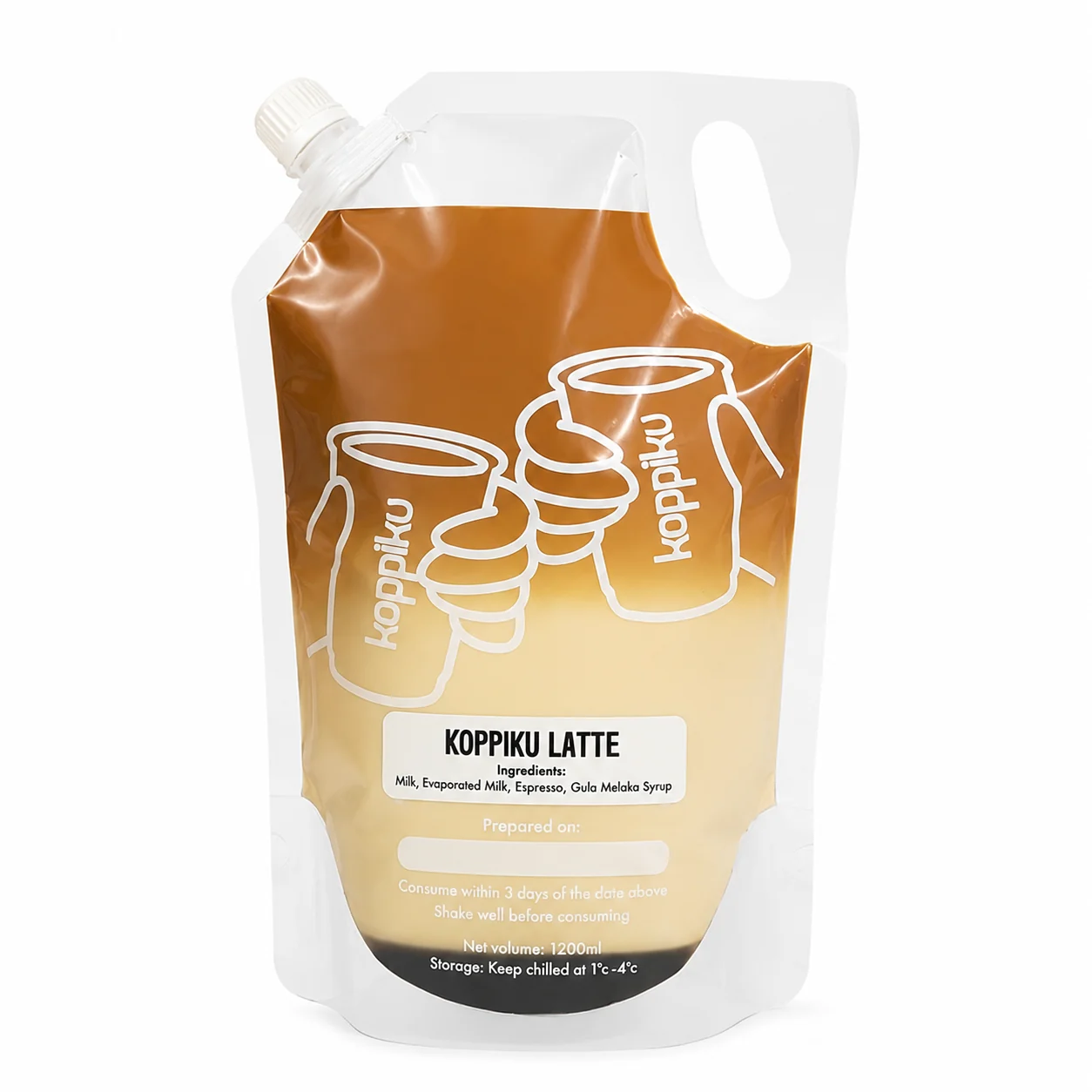
Use case
Retort Pouches require a specified process schedule, material and sealant system, pouch geometry, and validation plan. Do not infer retort suitability from the pouch shape alone; confirm the finished pack after processing.
Format details
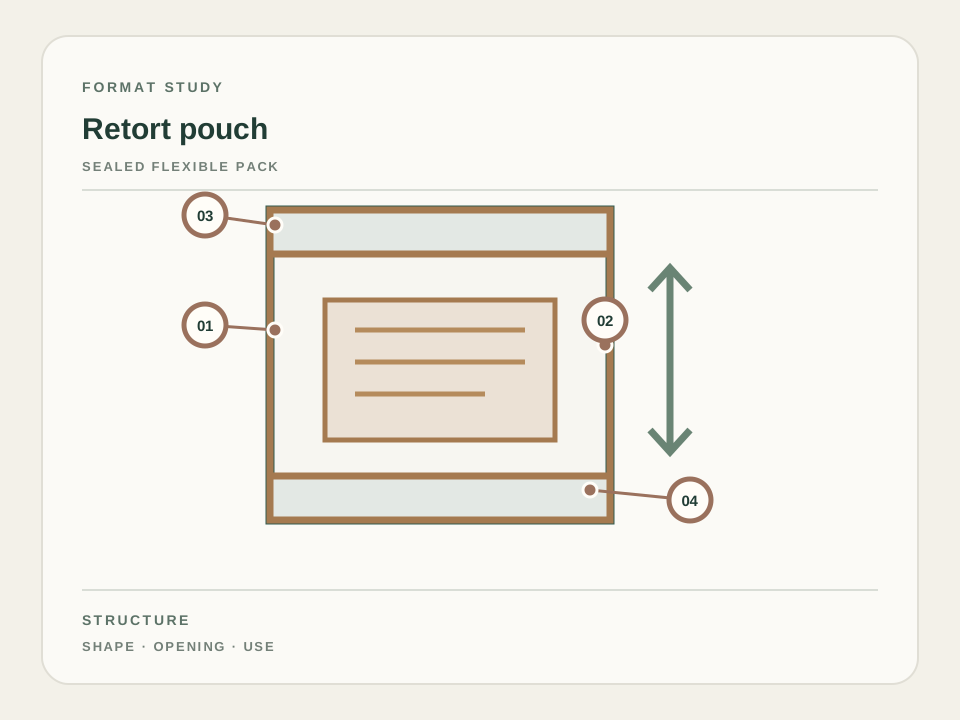
A retort pouch is a flexible sealed pack whose layers, sealant, and geometry must be considered with the specified treatment process. The pouch may have flat or gusseted sides depending on the project; this illustration shows a basic sealed pouch, not a performance claim. Filling and sealing happen before the planned treatment, then the finished pack is checked for changes. The process schedule and formulation should be known before selecting a construction.
Practical sequence
Load the agreed product through the open top.
Close the pouch using the selected seal area and line.
Follow the project process, then inspect the finished pouch.
Agree pouch geometry, layer construction, seal area, tear feature, size, and print around the stated process.
Compare the pouch before and after the specified treatment for shape, seals, opening, and handling. Record the process conditions used and compare the pack at the same fill level, orientation, and inspection points agreed for the project.
A buyer has a shelf-stable coffee beverage and is evaluating a retort pouch. Before discussing a construction, provide the formulation, fill volume, treatment schedule, temperature and time range, pouch geometry, and sealing route. The technical review should define what is being tested and who validates it. Compare representative packs before and after treatment for dimensions, seal integrity, distortion, opening, and distribution handling. Keep the process record attached to the material revision. A pouch name or layer abbreviation alone is not evidence that the exact system is retort-ready. Agree the validation owner and acceptance criteria before the trial, then keep the post-treatment sample with the exact formula, process schedule, and material revision. Document pre- and post-process dimensions against agreed tolerances.
Plan around this format
A retort pouch is suitable only as part of a defined process review. Provide the treatment schedule, temperature and time range, product formulation, fill volume, pouch geometry, and sealing route so the material and sealant system can be assessed together. The trial should compare pre- and post-process dimensions, distortion, seal integrity, opening behaviour, and transport handling.
Artwork should leave the heat-affected and sealing areas clear. Do not describe a pouch as retort-ready from its shape or laminate name alone; record the exact validated construction and process conditions before release.
Buying notes
Open the question that matches your next decision.
The listed size or capacity options are 200 ml, 250 ml, 500 ml, and custom capacities. Confirm the project dimension or capacity, product dose where relevant, seal area, and filled or assembled dimensions before approving the artwork.
No. Retort suitability depends on the specified schedule, material and sealant system, pouch geometry, and validation. Do not infer process capability from the pouch shape alone.
Send the product, target size or dose, current format, artwork status, quantity, destination, and preferred sample or quote route. Start with PET/AL/NY/RCPP; PET/NY/RCPP and use the checks below to frame the first discussion.
Choose with confidence
A retort-pouch project starts with the product and its treatment process. Confirm that route before choosing the construction, size or printed design.
See how samples are reviewedShare the formulation, fill volume, treatment conditions and process partner. Review the selected pouch construction and any fitment against that specific process. A retort label on a reference pack does not establish suitability for another recipe or cycle.
Keep the artwork tied to the agreed pouch and treatment route. Check seal areas, code placement and the appearance of the chosen print and finish after the relevant process trial.
Agree the filling, sealing, treatment and distribution checks with the responsible technical partners. Keep the approved process information and pack reference together before a production release; the packaging quote should state its actual supply and trial scope.
In practice
A retort-capable direction still needs approval for the actual filled product.
Give the responsible processor the proposed construction, pouch dimensions and fill details before committing to print. The product formulation, treatment and package system need to be assessed together.
This page does not provide a processing schedule or a universal temperature setting. Ask the qualified processing team to define the required validation and keep its approved package reference with the order specification.
A sample before processing and a sample after processing answer different questions. Agree what should be examined after the actual validated process, including appearance, seal condition, opening and handling.
Keep the relevant batch and trial records. A visually acceptable pouch alone cannot establish food safety or shelf life, and a material change should be reviewed by the team responsible for the process.
Record the exact material reference, dimensions, print revision and selected features used in the approved trial. If a supplier proposes a substitute, ask for a written change review before accepting it.
Keep the user instructions and storage wording tied to the approved product. This reduces the risk of a purchasing or artwork change being treated as unrelated to the package that was originally assessed.
Product enquiry
Share your coffee, fill weight, planned quantity and destination. Ask about fit, samples or pricing; we will review the details needed for a useful quotation.
Custom production usually starts from 10,000 pieces. Available standard samples are free; shipping is confirmed separately.