Open
Separate the folded sides and check the mouth fits the filling method.
 Get a Quote
Coffee Bean Packaging
A classic expandable coffee bag for retail, wholesale, and larger fill weights.
Sizes & capacity: 50 g to 5 kg; popular sizes: 100 g, 250 g, 500 g, and 1 kg
Use case
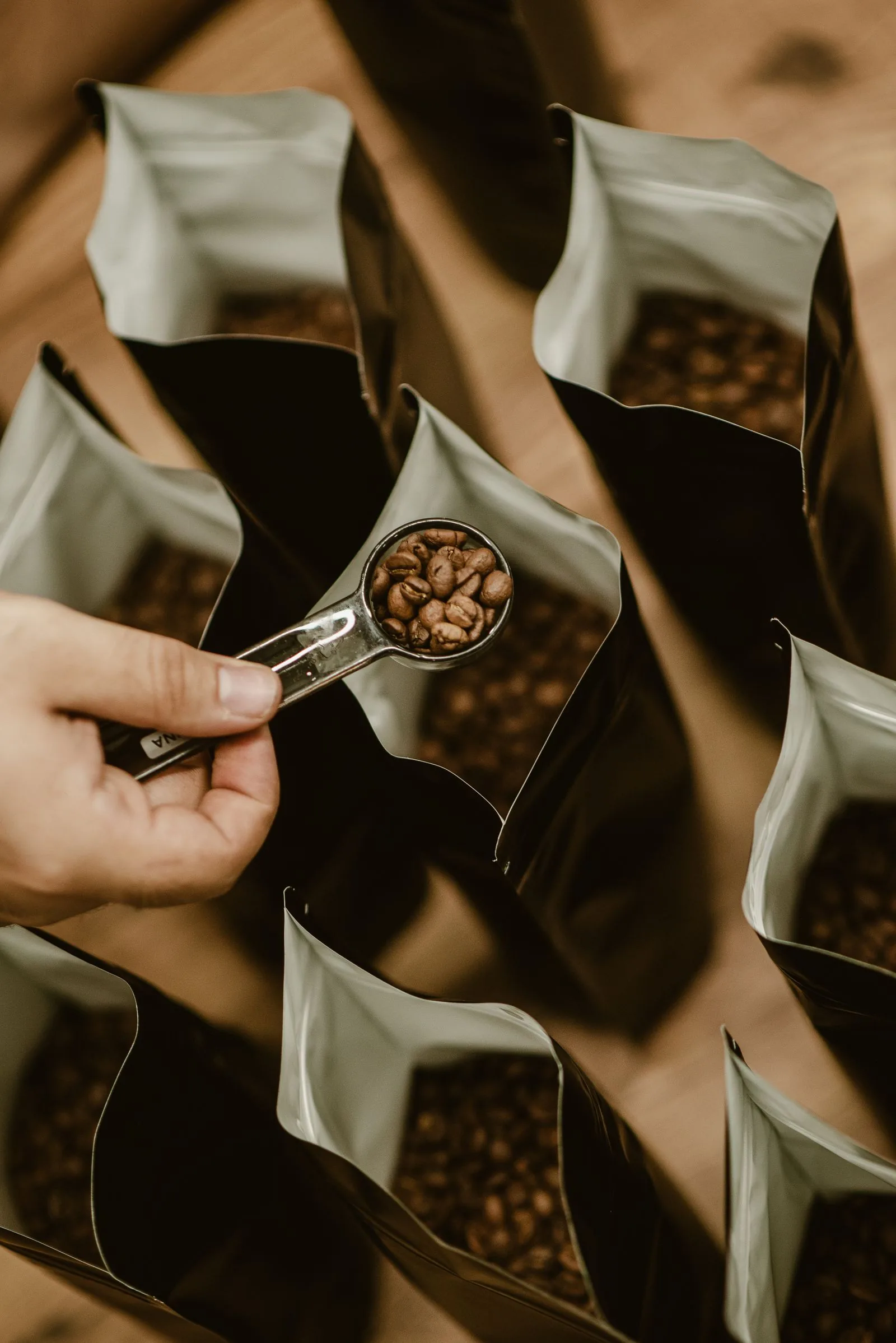
Side Gusset Coffee Bags use expandable side folds to accommodate larger roasted-coffee fills. Confirm the filled width, gusset expansion, top seal, and artwork area with the intended filling and case-packing route.
Side gusset coffee bags

Compare the actual scoop or nozzle with the open mouth. Outside width alone does not establish equipment compatibility.
Check for uneven folds and coffee near the seal. Record the equipment and trial conditions; repeat checks after construction changes.
Try lifting and pouring a filled café pack. Check the carton arrangement and keep barcodes away from folds on the approved artwork.
Format details

Two folded side gussets sit flat while the bag is empty and expand outward during filling. The front and back remain the main display panels, while the gussets carry the depth and form the familiar block shape. This makes the pack useful when a roaster wants a simple front face and a practical larger-fill profile. Measure the filled width rather than the flat width alone, because roast density and settling change how far the folds open.
Practical sequence
Separate the folded sides and check the mouth fits the filling method.
Load the planned roast, then let the gussets open naturally around it.
Close the top and test the filled width against shelf and case space.
Set face width, gusset depth, top closure, valve location, material, finish, and case-facing orientation.
Check that both gussets open evenly, the bag closes cleanly, and the filled pack stacks without a forced fold.
A brand is ordering empty bags for a retail and foodservice range. Match each size to its filling route, packed case count, filled width, top opening, valve or zipper position, and the way staff lift and reseal the larger bag. Ask the filling partner whether both sizes can run on the same line settings. Keep a separate sample and specification for each size; a successful retail fill does not establish case strength or handling for the bulk format. Confirm case dimensions and storage of empty bags as well as the filled pack, since gusset width changes how units sit together during transport and on the packing line. Check how the packed cases stack in the intended warehouse footprint.
Buying notes
Open the question that matches your next decision.
The listed size or capacity options are 50 g to 5 kg; popular sizes: 100 g, 250 g, 500 g, and 1 kg. Confirm the project dimension or capacity, product dose where relevant, seal area, and filled or assembled dimensions before approving the artwork.
The gusset expands with the fill and changes the top-seal and side-panel layout. Confirm filled width, opening, seal clearance, and stability on the intended filling and case-packing route.
Send the product, target size or dose, current format, artwork status, quantity, destination, and preferred sample or quote route. Start with PET/AL/PE; PET/VMPET/PE; Kraft Paper/VMPET/PE; recyclable mono-material directions and use the checks below to frame the first discussion.
Product enquiry
Share your coffee, fill weight, planned quantity and destination. Ask about fit, samples or pricing; we will review the details needed for a useful quotation.
Custom production usually starts from 10,000 pieces. Available standard samples are free; shipping is confirmed separately.