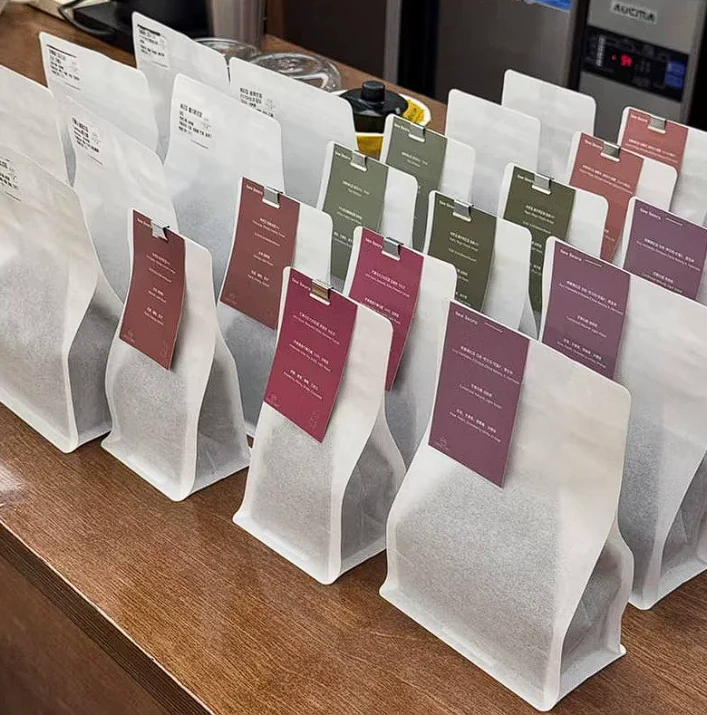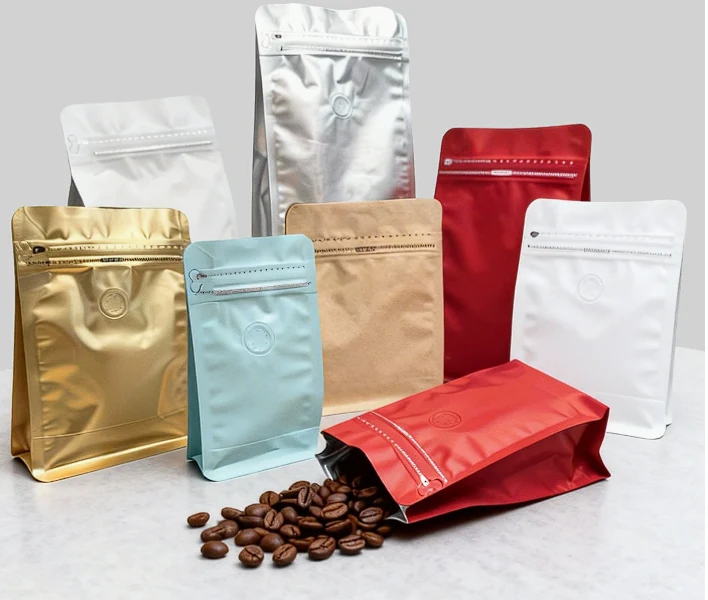
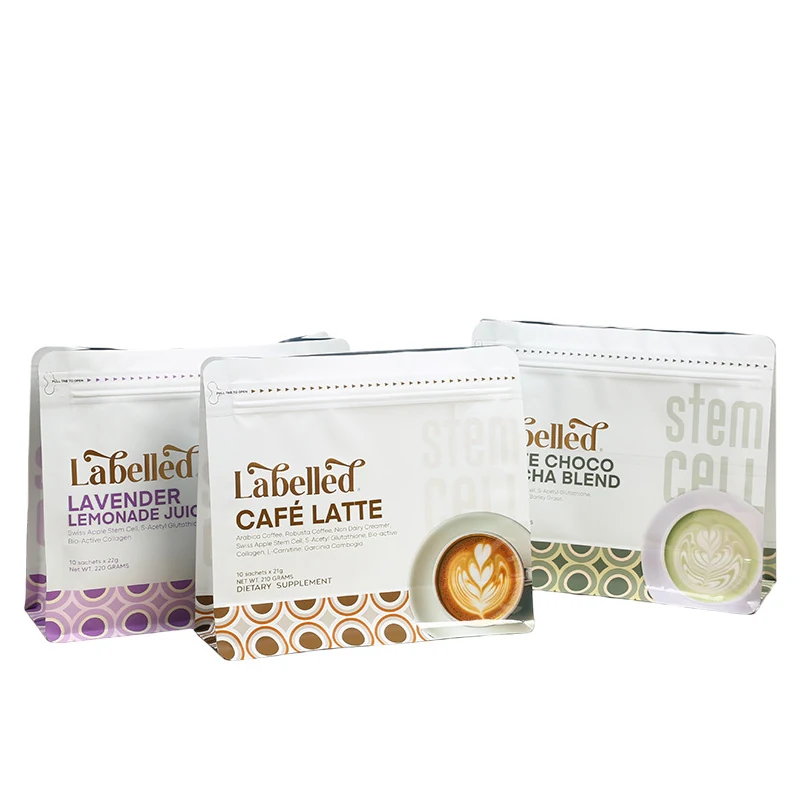
Flat bottom and side gusset bags can both protect roasted coffee, carry a valve and support custom printing. The useful difference is not which shape looks more premium in a photograph. It is how each format behaves when it is filled, sealed, displayed, packed into cartons and used by the customer.
Quick comparison
| Decision | Flat bottom coffee bag | Side gusset coffee bag |
|---|---|---|
| Shelf stance | Stable base with defined front, back, side and bottom panels | Expands through side gussets and can create a traditional brick-like pack |
| Branding area | Multiple controlled panels for premium retail systems | Broad front and back areas with side-gusset artwork considerations |
| Fill direction | Often selected for consumer retail and structured presentation | Useful across retail, wholesale and larger fill weights |
| Closures | Zipper, one-way valve and tear features can be integrated | Valve, top closure and optional reseal route depend on the exact construction |
| Packing review | Check base opening, corner seals and filled stance | Check side expansion, top seal and carton compression |
Choose flat bottom when panel control matters
A flat bottom coffee bag gives the design team distinct printable surfaces. That can help a brand keep the main identity on the front, preparation and regulatory information on the back, and range or origin information on the sides.
The format still needs a fill test. A base that looks crisp when empty may bow when the coffee volume is too high, while an oversized bag can collapse and make the print look weak. Corner seals, zipper clearance and valve location should be reviewed on production-representative samples.
Choose side gusset when expansion and larger fills lead
A side gusset coffee bag expands through folds along both sides. It can support larger retail and foodservice fills while using carton space efficiently. The format is also familiar to buyers who want a classic coffee-pack silhouette.
Artwork must account for the folded gussets. Important text or codes should not disappear into a crease, and the final width should be assessed when the bag is full. For larger net weights, film strength, seal area and carton loading deserve as much attention as the appearance.
Material and barrier are separate decisions
Bag shape does not determine barrier performance. Either format may use a printed PET/VMPET/PE direction, a kraft-facing laminate or a PET/AL/PE structure, subject to the exact specification and available converting route. Compare the complete layer order, nominal thickness, OTR/WVTR evidence, sealant and valve instead of assuming that one silhouette is automatically fresher.
Use the sales route as the tie-breaker
- Retail and ecommerce: prioritize filled appearance, front-panel recognition, zipper use and parcel handling.
- Subscriptions and multi-SKU ranges: check whether one base structure can support changing labels or artwork.
- Wholesale and foodservice: prioritize efficient fill, repeated opening, larger capacity and carton strength.
- Export: review distribution time, climate, opaque barrier direction, carton packing and destination documents.
When the commercial route and coffee are known, the coffee bean packaging range provides a clearer starting point than choosing a shape from an unfilled mockup.
Make the final decision with two filled samples
- Fill both formats with the exact net weight
- Compare panel shape, seal clearance and valve position
- Place both packs in the intended carton
- Review artwork and barcode on the physical surface
- Test opening and resealing with representative users
Research notes
Sources & standards
- ASTM F88/F88M-23: seal strength of flexible barrier materials
- ASTM D3985-24: oxygen transmission through films and laminates
Technical references explain the decision framework. Final performance and compliance depend on the exact approved construction, test conditions, intended use and destination market.