VMPET and aluminum foil are not interchangeable names for a silver-looking layer. VMPET is a polymer film carrying a thin deposited metal layer. Aluminum foil is a continuous metal web. Their suitability depends on the complete laminate and the way the bag is converted, filled and shipped.
Comparison for a coffee project
| Decision point | VMPET direction | Aluminum foil direction |
|---|---|---|
| Primary use | Balanced barrier, appearance, flexibility and cost for many retail projects. | Maximum opaque protection where the approved project prioritizes light, oxygen and moisture control. |
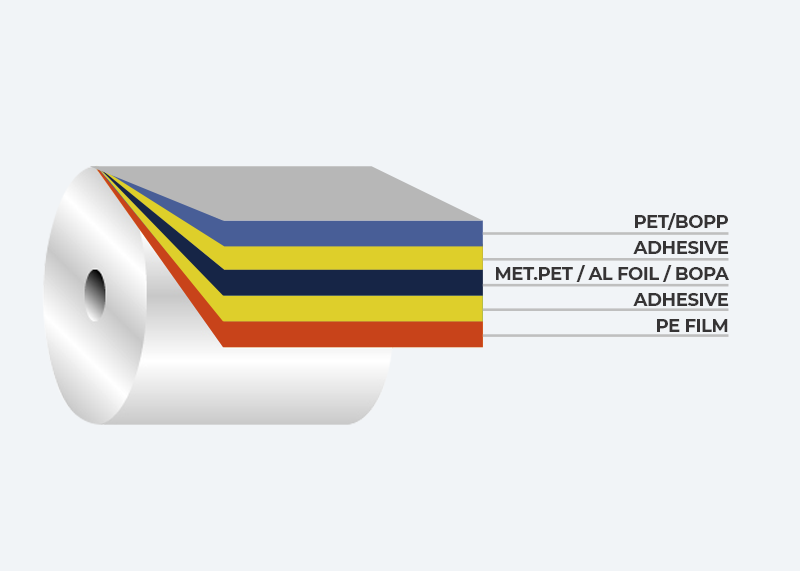
| Construction example | PET / VMPET / PE | PET / AL / PE, including Crystavo’s 100% Barrier option. |
| Appearance | Metallic effect can be used as part of the visual design. | Normally opaque; the outer web controls the printed appearance. |
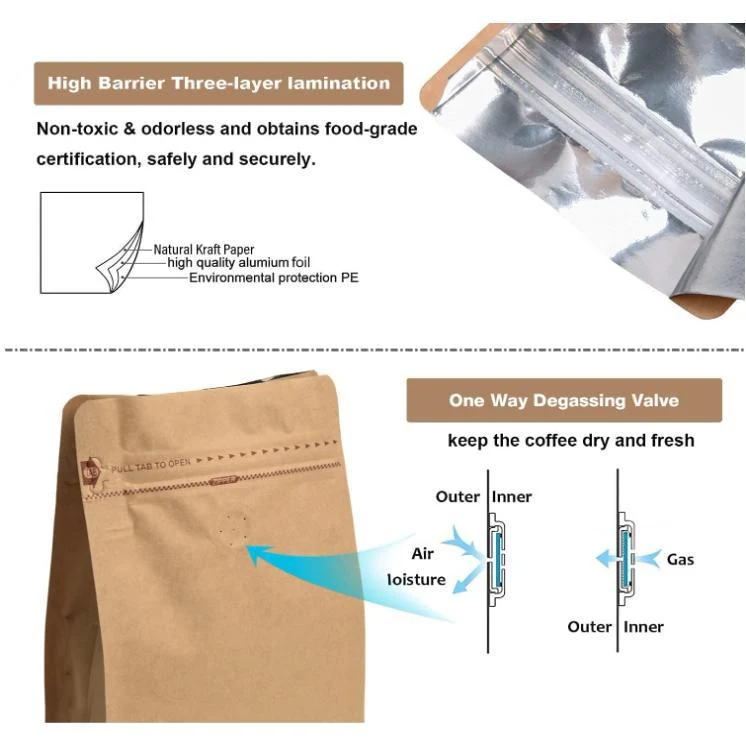
| Handling review | Check metallization quality, laminate bond and barrier after converting. | Check foil gauge, folds, flex exposure, valve installation and finished-pack handling. |
| Evidence | Exact OTR/WVTR report for the quoted laminate and conditions. | Exact report for the quoted PET/AL/PE construction and conditions. |
Choose by route, not by appearance
A shorter domestic route, predictable replenishment and an everyday retail shelf-life target may support a tested VMPET construction. A longer export route, high humidity exposure, opaque protection requirement or conservative freshness target may justify reviewing PET/AL/PE.
Neither choice removes the need to verify seals, valve installation and the filled bag. A high-barrier web with a leaking top seal is not a high-performing package.
Questions for the quotation
- What is the exact layer order and nominal thickness?
- Which specimen was used for the stated OTR and WVTR?
- What temperature and humidity conditions were used?
- Will the bag include a zipper, valve, laser score or window?
- How long and demanding is the distribution route?
- Will the structure be changed between sample and mass production?
Crystavo records the selected construction and its applicable evidence in the written project specification. The wording “100% Barrier” applies to the approved PET/AL/PE option supported by the corresponding report, not to every pouch that contains foil.
Research notes
Sources & standards
- ASTM D3985-24: oxygen transmission testing and interpretation
- ASTM F1249-25: water-vapor transmission testing and interpretation
- Specialty Coffee Association: packaging and coffee-staling literature review
Technical references explain the decision framework. Final performance and compliance depend on the exact approved construction, test conditions, intended use and destination market.