Coffee bag size should be confirmed with coffee, not selected from net weight alone. A 12 oz label tells you the amount sold to the customer. It does not tell you the volume occupied by a particular roast, the headspace needed for filling, or the panel dimensions required for your artwork.
Two coffees with the same net weight can fill the same pouch differently because bean size, roast development, density and grind all influence packed volume. This is why Crystavo treats capacity as a fill-test decision before final dimensions and dielines are released.
Start with the selling unit
| Common selling unit | Metric reference | Typical project use | What to verify |
|---|---|---|---|
| 8 oz | 227 g | Specialty releases, subscriptions and smaller retail packs | Front-panel proportion, filled stance and zipper clearance |
| 12 oz | 340 g | Common North American specialty retail size | Actual roast density, valve position and parcel handling |
| 1 lb | 454 g | Retail, cafe and direct-to-consumer packs | Do not assume a 12 oz bag can simply be filled higher |
| 2 lb | 907 g | Wholesale, office and foodservice supply | Gusset opening, seal strength and repeated handling |
| 5 lb | 2.27 kg | Foodservice, roastery and high-volume use | Film strength, top seal, carton load and filling equipment |
These are project categories, not universal dimensions. A supplier should not promise that one width and gusset will fit every 12 oz coffee. The approved size must reflect the actual or representative product.
Measure the coffee before the pouch
For whole-bean projects, record roast direction, bean origin or representative blend, bulk density and the time between roasting and packing. For ground coffee, record grind range and packing method. Then fill several candidate pouches to the intended net weight.
The test checks whether the bag stands correctly, whether the product crowds the zipper, whether enough clean film remains for the final heat seal, and whether the valve sits above the product rather than inside a fold. The same filled sample should be reviewed inside the planned shipping carton.
The six dimensions worth approving
- Finished width: controls the front panel and filling opening.
- Finished height: must include usable headspace, zipper and top-seal areas.
- Bottom or side gusset: controls expansion, capacity and shelf stance.
- Valve position: must clear coffee, folds, zipper, seals and critical artwork.
- Usable artwork panels: should be checked on a filled bag, not only on a flat dieline.
- Case configuration: confirms how many filled or empty bags fit per carton and how they travel.
Choose a format after the fill test
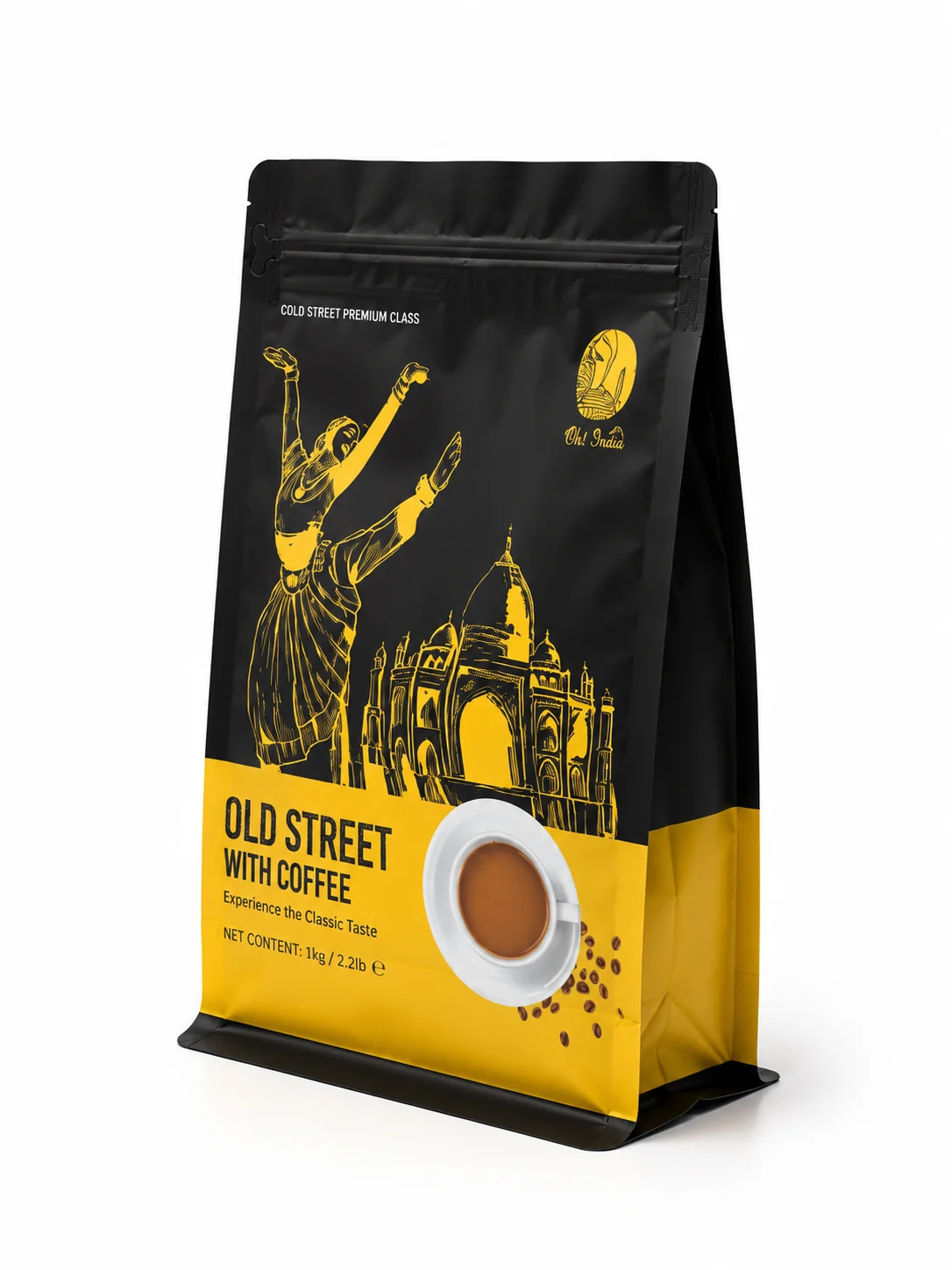
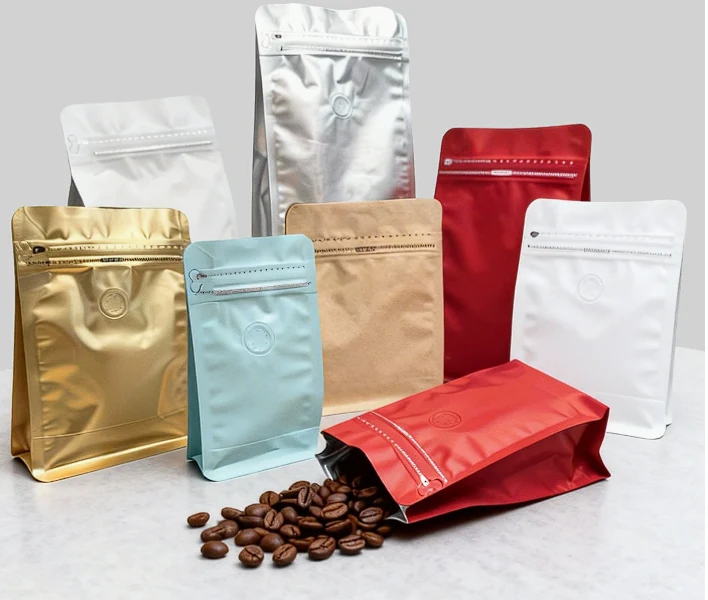
A structured flat bottom coffee bag can provide strong shelf stance and clear front, side and bottom panels. A side gusset coffee bag expands efficiently for larger fills and traditional wholesale presentation. A stand-up or K-seal pouch may be suitable when a simpler construction and broad face panel are priorities.
Browse the coffee bean packaging range to compare these formats. The format decision should come after the product, selling unit, route and filling process are known.
Approve artwork only after size is stable
Changing dimensions after design begins can move folds, shorten panels, crowd required copy and change label proportions. The better sequence is: choose a likely format, run the fill test, confirm dimensions, release the official dieline, then place artwork.
Information to send for a size recommendation
- Whole bean, ground coffee or another coffee application
- Exact net weight in oz, lb, g or kg
- Roast or grind direction and a representative product sample
- Valve, zipper and filling-equipment requirements
- Retail, ecommerce, wholesale or export route
- Estimated quantity and destination
Research notes
Sources & standards
- Specialty Coffee Association: literature review on roasted coffee staling
- ASTM F88/F88M-23: seal strength of flexible barrier materials
Technical references explain the decision framework. Final performance and compliance depend on the exact approved construction, test conditions, intended use and destination market.