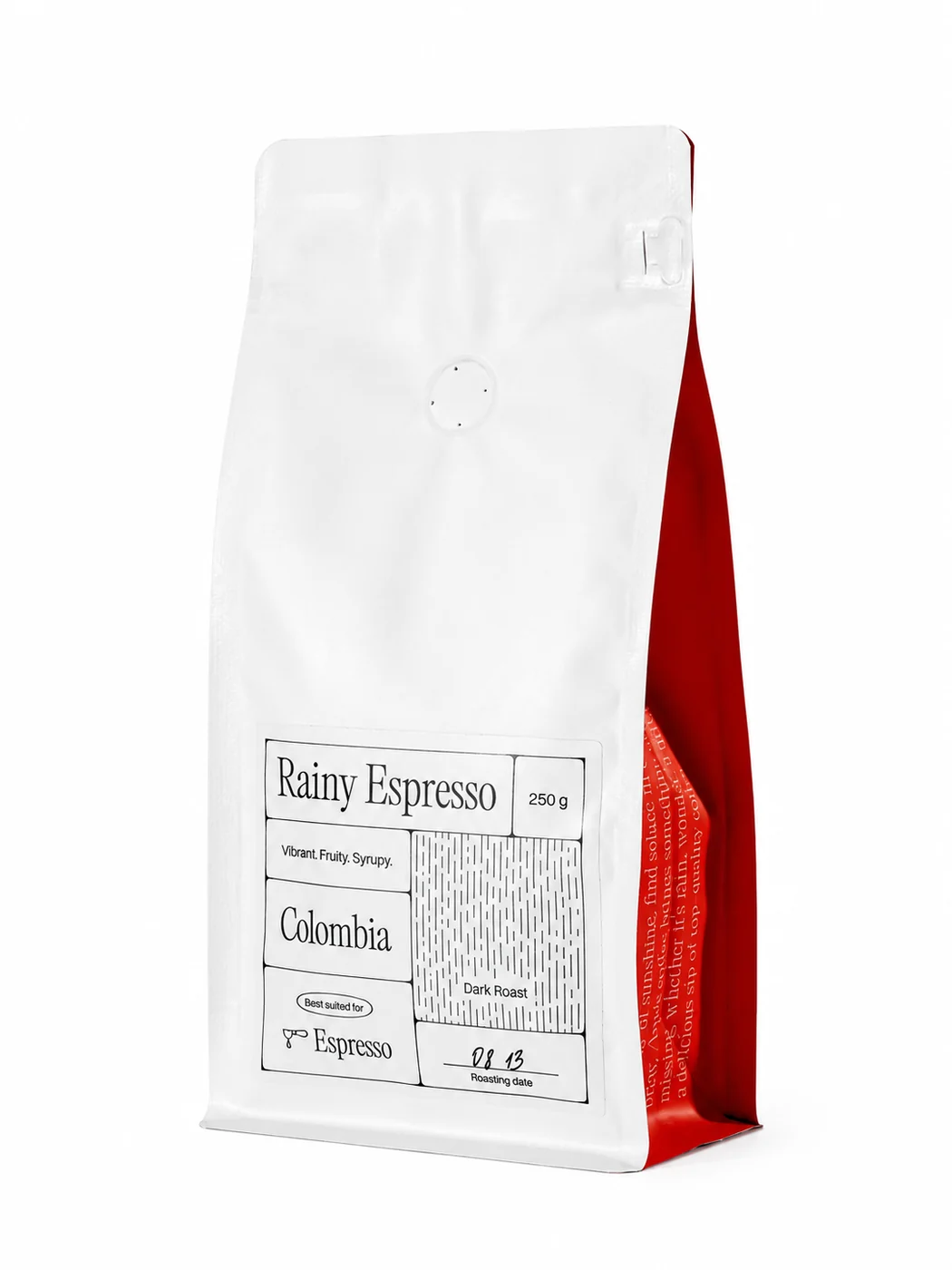
Flat bottom and side gusset bags can both protect roasted coffee, carry a valve and support custom printing. The useful difference is not which shape looks more premium in a photograph. It is how each format behaves when it is filled, sealed, displayed, packed into cartons and used by the customer.
Quick comparison
| Decision | Flat bottom coffee bag | Side gusset coffee bag |
|---|---|---|
| Shelf stance | Stable base with defined front, back, side and bottom panels | Expands through side gussets and can create a traditional brick-like pack |
| Branding area | Multiple controlled panels for premium retail systems | Broad front and back areas with side-gusset artwork considerations |
| Fill direction | Often selected for consumer retail and structured presentation | Useful across retail, wholesale and larger fill weights |
| Closures | Zipper, one-way valve and tear features can be integrated | Valve, top closure and optional reseal route depend on the exact construction |
| Packing review | Check base opening, corner seals and filled stance | Check side expansion, top seal and carton compression |
Choose flat bottom when panel control matters
A flat bottom coffee bag gives the design team distinct printable surfaces. That can help a brand keep the main identity on the front, preparation and regulatory information on the back, and range or origin information on the sides.
The format still needs a fill test. A base that looks crisp when empty may bow when the coffee volume is too high, while an oversized bag can collapse and make the print look weak. Corner seals, zipper clearance and valve location should be reviewed on production-representative samples.
Choose side gusset when expansion and larger fills lead
A side gusset coffee bag expands through folds along both sides. It can support larger retail and foodservice fills while using carton space efficiently. The format is also familiar to buyers who want a classic coffee-pack silhouette.
Artwork must account for the folded gussets. Important text or codes should not disappear into a crease, and the final width should be assessed when the bag is full. For larger net weights, film strength, seal area and carton loading deserve as much attention as the appearance.
Material and barrier are separate decisions
Bag shape does not determine barrier performance. Either format may use a printed PET/VMPET/PE direction, a kraft-facing laminate or a PET/AL/PE structure, subject to the exact specification and available converting route. Compare the complete layer order, nominal thickness, OTR/WVTR evidence, sealant and valve instead of assuming that one silhouette is automatically fresher.
Use the sales route as the tie-breaker
Planning example: a roaster compares a flat-bottom pouch with a side-gusset bag for the same 1 lb coffee. On a shelf, the flat base may make the filled pack easier to stand and give the front panel a predictable shape; in a case-packing workflow, the side gusset may use space differently and present a familiar bulk-bag profile. Neither outline determines the winner. Fill both with the same roast, then check the display face, opening, reseal, top-seal clearance, carton count, and storage of empty bags. If the product will be sold through both retail and foodservice, compare the two routes separately rather than forcing one structure to serve incompatible handling needs. Include case stack height and empty-bag storage volume if warehouse space or shipping cube affects the choice.
- Retail and ecommerce: prioritize filled appearance, front-panel recognition, zipper use and parcel handling.
- Subscriptions and multi-SKU ranges: check whether one base structure can support changing labels or artwork.
- Wholesale and foodservice: prioritize efficient fill, repeated opening, larger capacity and carton strength.
- Export: review distribution time, climate, opaque barrier direction, carton packing and destination documents.
When the commercial route and coffee are known, the coffee bean packaging range provides a clearer starting point than choosing a shape from an unfilled mockup.
Make the final decision with two filled samples
- Fill both formats with the exact net weight
- Compare panel shape, seal clearance and valve position
- Place both packs in the intended carton
- Review artwork and barcode on the physical surface
- Test opening and resealing with representative users
Format tie-breaker
Compare the filled samples on shelf face, stability, opening width, reseal access, case packing, empty-bag storage, and the way copy sits after the gusset opens. Choose the format that supports the actual route; do not decide from an empty outline alone.
Record the result with the project reference.
In practice
Compare the work, not just the shape.
Two bags can hold the same coffee while creating different operating routines.
Build a small decision sheet
Compare the formats under four headings: filling, customer use, shelf display and case packing. Ask the person responsible for each step to review a filled sample. For example, a broad face may help the retail design while a different footprint works better in the existing case.
Record the tradeoff instead of awarding a general “premium” label to one format. Keep quantity, material and selected features consistent in the quotation comparison so that a shape preference is not confused with a different commercial specification.
Consider a split range
A brand does not have to use the same format for retail and wholesale coffee. A smaller retail pack and a larger café refill can share typography, color and identification cues while using different dimensions or constructions. Review the designs side by side so the family remains recognizable.
Then plan inventory separately by size and artwork. A consistent brand system can be more useful than forcing every product into one physical shape, especially when the filling method or customer routine is different.